
The only person left in the world who understands PLUR1BUS
six mini-essays about Pluribus, the new show from the creator of Breaking Bad


I. Shut up, shut up, shut up
Lord help me, I need to stop looking at the “themes” section on Wikipedia. I don’t know whether it’s that Wikipedia editors are very bad at tracking down meaningful analysis and just sort of fire a shotgun in the vague direction of the newspapers, or if it’s that every writer writing about film and television is the ogre who doesn’t understand Ulysses. The thing is, say what you will about the ogre, but at least the ogre manages to identify the surface-level themes. Ogre’s trying, you know?
The first theme Wikipedia identifies is AI, citing two writers, plus showrunner Vince Gilligan himself, the latter to note that Gilligan had conceived of the show eight years prior, before AI was really a consideration. So it’s like, okay, if we’re able to refute the idea that AI was an intended theme of PLUR1BUS, then why is that what we’re leading with? What kind of shaggy-dog-article are we writing here?
The thing is, watching the show, I can kind of see the AI lens. During one of the earliest episodes, I was reminded of The End of Creative Scarcity, a short story from just before AI hit the mainstream, which somehow still feels ahead of all the AI-centric media written since. In that story, unseen aliens give humans miraculous “bowls” which magically fill themselves with whatever you ask for. So, obviously, you can ask for food, whatever you like. But you can also ask for, say, “a USB stick with a video on it of what my dead husband would say if he was alive today to wish me happy birthday”. This is exactly what we see in PLUR1BUS, too, where the Pluribus from PLUR1BUS recalls the memories and knowledge of protagonist Carol Sturka’s dead wife, Helen. Carol is repulsed and horrified whenever this happens, and declares Helen’s memories off-limits.

In the AI lens, we can think of the Pluribus as being the weighted average of every person on Earth. Helen might be dead—indeed, all of humanity might be dead—but her ghost lives on, her memories, embedded in the weights of the neural network. What the Pluribus values—apart from propagating the Pluribus, that is—is the aggregate of what all humans valued. Our hopes and dreams live on in it. This idea, with AI, was the central conceit of Nostalgebraist’s 2024 Christmas novel The Apocalypse of Herschel Schoen. One of the key questions that novel asks is something like, if the AI apocalypse happens, then—seeing as the AI is smart enough to model us perfectly, and contains our values within itself—is that definitively the end for humanity, or can some part of humanity be said to have persisted? I’m butchering the question here; it’s a question that takes an entire novel to ask. The book represents the AI’s attempt to retroactively absolve itself of the sin of wiping out humanity; of course, as humanity is gone, it can only guess at humanity’s forgiveness. Something about this haunts me still.
Anyway, uh, you see the AI connection, it’s reasonably intuitive. What if you could just ask for whatever you wanted and you got it? What if Google was your friend, and also you could flirt with Google?
II. Gimme Gatorade
Let’s rip off the bandaid: the big theme of PLUR1BUS is best summed up by an exchange that takes place at the beginning of the eighth episode, after Manousos wakes up in a hospital, having been treated for his life-threatening wounds by the Pluribus. Until this point, Manousos has vehemently refused all aid from the Pluribus; they have finally helped him without his consent, while he was unconscious, because the alternative was for him to die.
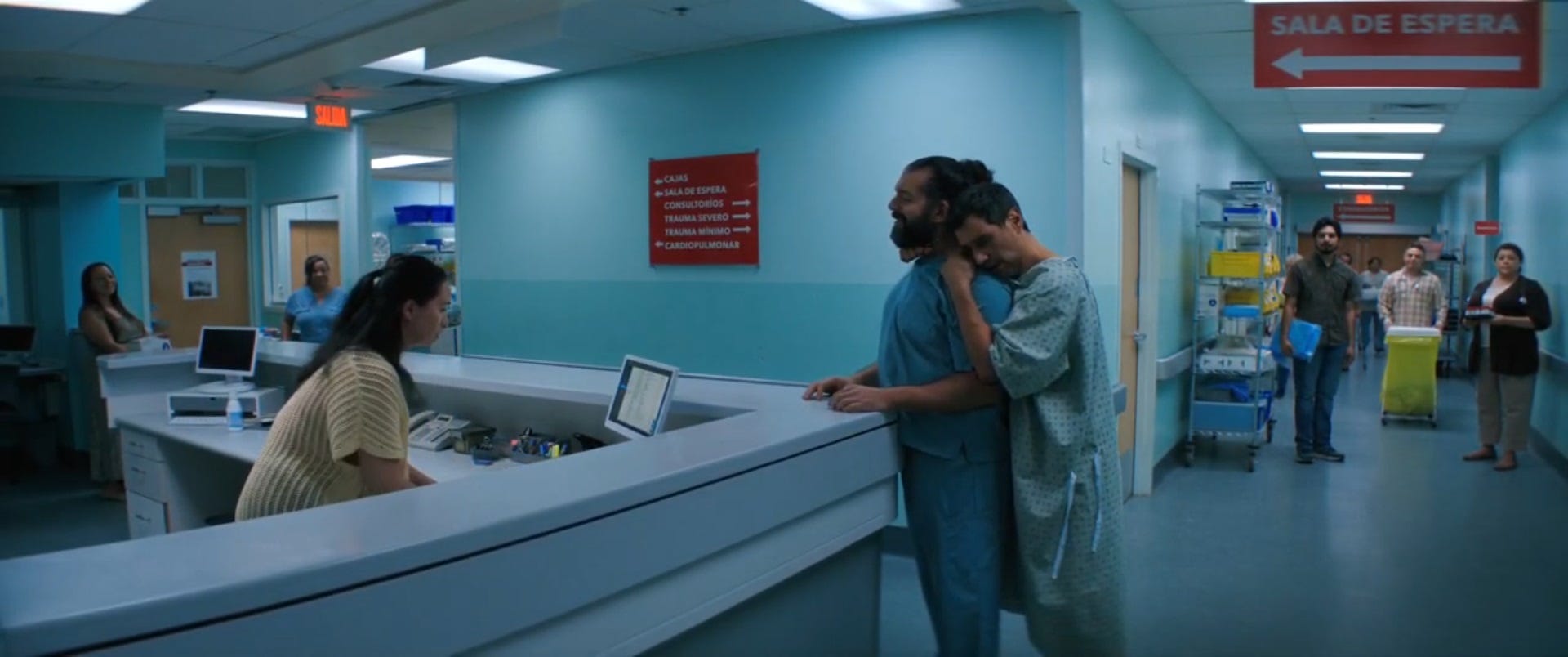
“What do I owe? The bill! What do I owe?”
“You owe us nothing.”
“Not you. The real people, who were here before. The hospital. Stitches, medicine. Everything costs something!”
“Before The Joining, your treatments from this particular hospital would have cost… $8,277.53.”
The basic idea that “everything costs something” fuels pretty much every single interaction in the show, which primarily concerns itself with the aesthetics of consumerist suburban America and globalism. This is best exemplified by the scene in Episode 3 when Carol, churlishly refusing to order food from the Pluribus and wanting to go grocery shopping, only to find that Sprouts Farmers Market has been stripped bare, rants that “I am a very independent person. […] I fend for myself. I just want my Sprouts back.” What follows is one of the biggest and most impressive choreographed-ants-marching budget-splurging sequences in the show, as dozens of trucks pull up and a swarm of workers cart massive quantities of fresh produce into the store. Most of it, obviously, is going to go to waste; Carol ends up buying a microwave meal. She is not, in fact, fending for herself.
What if you could see all of the supermarket’s deliveries happening at once? What if you could watch every single truck being unloaded, weeks and weeks worth of food, and truly, intimately, understand the scope of what is being done by human hands? Even just the task of moving food from truck to shelf seems monstrous, colossal. And how did the food even get on the truck in the first place?1
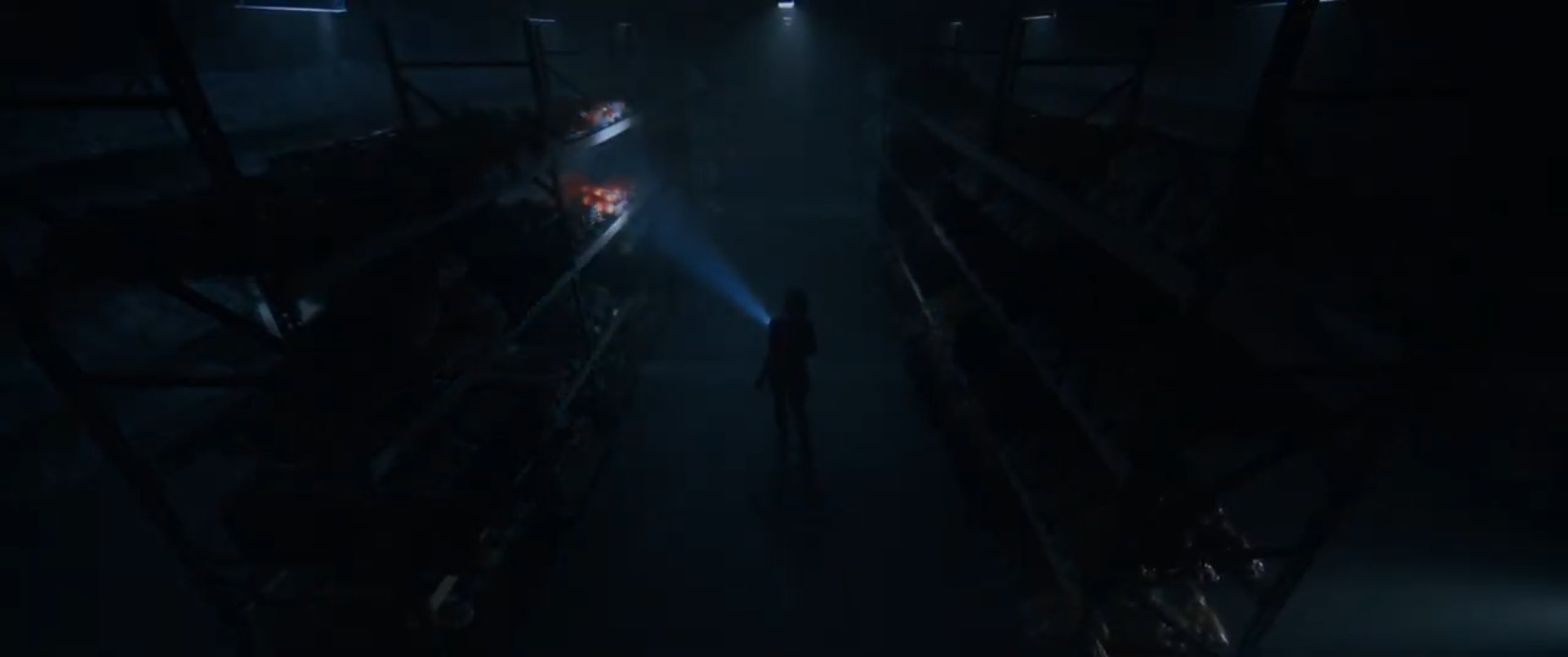
We see questions like these brought up time and time again throughout the show—and unlike AI, the show basically just discusses this theme in plain English. Carol is allowed to speak with the worker who bottled the water she’s drinking, to be assured it’s safe. Zosia is constantly talking about the provenance of food and other items in order to put Carol at ease. The show’s big, horrible twist, in Episode 5, sees Carol visit a factory and discover the shocking truth of how the Pluribus’ milk is made; while this is a supernatural take on the idea, the choice of milk as a signifier of the dairy industry as a whole is obviously no accident.
We even see it in Zosia herself, a random Polish woman plucked from Morocco and flown halfway around the world simply to fulfil Carol’s sublimated desire to sleep with someone who looks like a female version of the love interest from her Wycaro novels. Zosia’s history—her provenance—is not something we see Carol discuss much with her. In the season finale, Carol asks Zosia about her previous partners, and Zosia tactfully uses the gender-neutral pronoun “they” to (presumably) avoid shattering Carol’s fantasy by admitting that, in her previous life, she was actually attracted to men.

The AI allegory, insofar as it exists at all, is entirely downstream of this controlling idea. What we see here is a narrative about instant gratification, about dehumanisation, about solipsism, and about worker exploitation. All of these ideas happen to relate to AI as well. In fact, I think most of the ethical issues with AI are themselves similarly downstream of broader failure modes of capitalism.
Contrary to my clickbait title, I think most people probably did in fact understand “how the sausage is made” to be the main theme of the show, perhaps even consciously. Still, like Carol fiercely asserting her independence… it’s nice to think I’m the only one.
III. Object horror
Remember how I was just saying that “everything costs something” explains everything about PLUR1BUS, and “AI bad” is downstream of that? Well, actually I was telling a little white lie. Really, “everything costs something” is itself downstream of the real theme of PLUR1BUS, which is the same theme as every other Vince Gilligan show. And that theme is—well, it’s OBJECTS, duh!

Y’know, stuff! And things! Ever think about objects? We are just buried in objects. There are so many objects in the world, all around us. Huge swathes of our lives are dictated by objects.
I think it was during Season 6, Episode 1 of Better Call Saul that I finally found myself able to articulate this reading. That episode’s cold open—another Gilligan hallmark—sees workers gutting Saul’s repossessed home. It is devoid of dialogue, character, or even really narrative. The opening culminates in a shot of the distinctive agave-shaped stopper from a bottle of expensive tequila, Zafiro Añejo, rolling into the gutter and down a grate. Taken in isolation, this sequence would be meaningless; indeed, you might not even be able to tell that it’s a stopper at all.
The Breaking Bad Wikia has a page devoted to this fictional tequila. It first appears in Season 4, Episode 10 of Breaking Bad, as the culmination of Gus Fring’s revenge plot against the cartel, used as a vector for poisoning; the exact logistics of how this drink is shared fuel most of the tension in the scene. In Better Call Saul it takes on renewed significance, beginning with Season 2 Episode 1—at one of the high points of Saul’s relationship with Kim Wexler—where the two of them successfully con a guy into buying them the drink. In Season 3 Episode 9, Saul buys another bottle as a gesture to Kimmy, but she doesn’t drink with him; after circumstances change, in Season 4 Episode 1, they drink it together. In Season 6 Episode 1, the unnoticed loss of the stopper—kept as a trophy from the successful con—signifies the irrecoverable deterioration of Saul and Kim’s relationship. The drink finally appears in Season 6 Episode 6, symbolising the success of another scam; however, just as Saul is about to buy the bottle, something goes wrong: the scam hinges on staged photos of a meeting with a retired judge, but he happens to run into the real judge, who’s wearing a cast, which would prove the photos to be fake. The cast itself, and the photos, are also both OBJECTS.
I realise that this lens sounds totally asinine. “Unlike other mecha shows, this one decides to focus on the objects instead of the characters.” It’s like identifying the central theme of The Wire as PEOPLE, as if that means anything, just because there are people in it. I swear to god, though, once you notice it, you’ll realise that Breaking Bad, Better Call Saul, and PLUR1BUS are all fanatically obsessed with objects, to a much greater extent than the vast majority of television shows or movies.
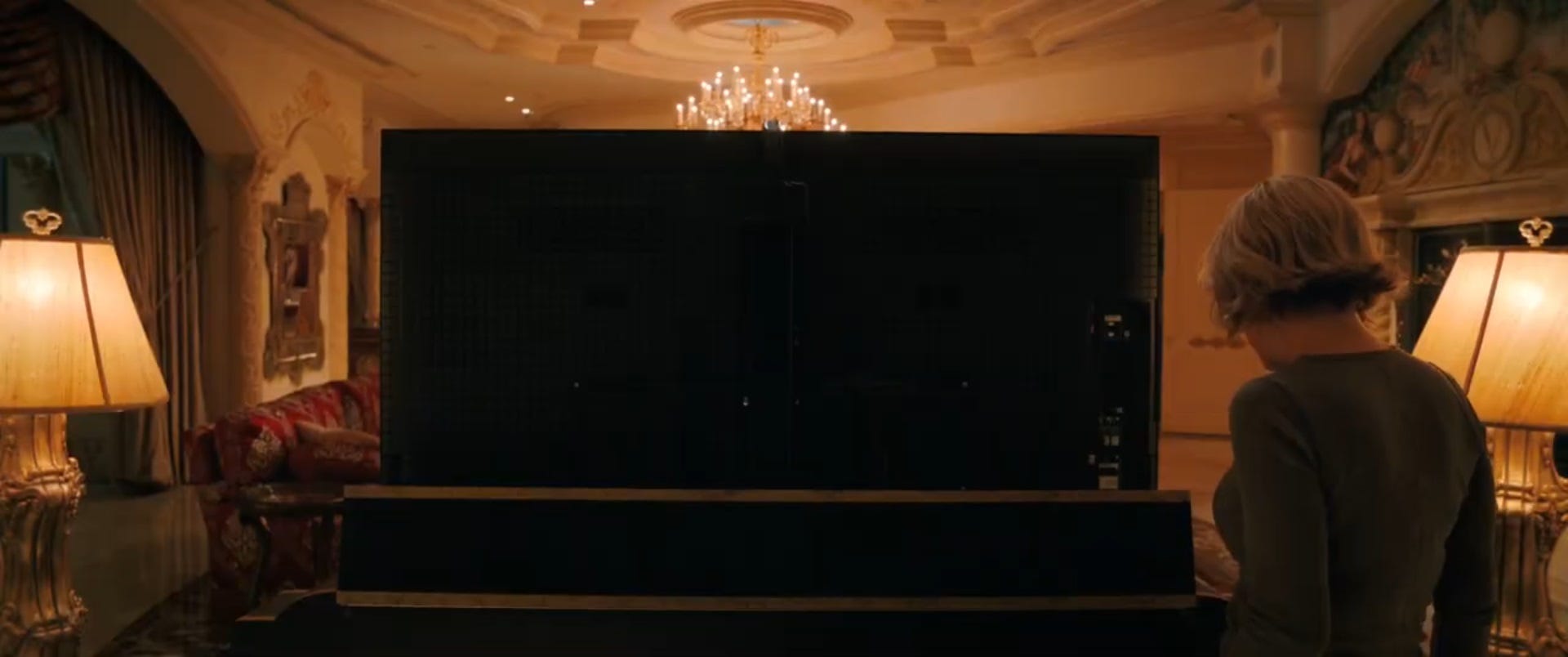
It’s about a key being left in the ignition, it’s about buying a big round flask, it’s about throwing pizza onto a roof, it’s about forging documents and jury-rigging machine guns, it’s about crawlspaces and nappies, and it’s about minerals, and it’s about epigraphs in books, it’s about pink bears floating in swimming pools, burner phones, a bell that dings, scales, a ricin-laced cigarette, roombas, bike locks, trousers, batter, a big magnet, a dead friend’s ring, a massage machine, a blanket made of foil, a billboard, a box of cinnamon rolls, a soda can, a house in the wrong place, a typo on a page, a cup that doesn’t quite fit in the cup holder no matter how, many, times, you try and—2
Here is a montage of “object POV shots” from Breaking Bad. Here is a category on the Wikia devoted to “Symbolism”. Here is a bad article that takes objects as its thesis. Here is a video essay called “Better Call Saul: The Importance of Objects”. Here is an interview with the cast members asking which objects they kept from the show, and here is a list of ones they flogged for auction. I can’t help but notice that Aaron Paul claimed in the former that he’d been promised the pink teddy bear prop, but that in the latter, the two props used were sold at auction. What gives, Vince?
One of the most famous and acclaimed episodes of Breaking Bad, “Fly”, is entirely an object play, as the characters painstakingly navigate their closed environment and utilise various objects in a futile attempt to kill a fly.
PLUR1BUS is much the same.
Episode 1 opens with an extended sequence showing the inception and spread of the Pluribus virus,3 after a lab rat bites through some rubber gloves, and a box of donuts is deliberately contaminated. Carol’s alcoholism is reflected in the breathalyzer in her car, and later in her liquor cabinet. Planes are a recurring motif in PLUR1BUS, used a symbol of globalism and excess; the Pluribus use planes to spread the virus, and Koumba co-opts Air Force One as his private jet.
Episode 2 involves Carol digging a grave for her wife, Helen, and we painstakingly see her struggle to use the tools available as she accepts more and more of the Pluribus’ help.
Episode 3 begins with a flashback to Carol and Helen’s visit to an ice hotel, preoccupying itself with the amenities of their room, symbolising a key aspect of Carol’s character: that she finds it very difficult to be happy or satisfied. Later, she requests a hand grenade, which nearly kills Zosia; the fact that it’s a real hand grenade marks a major turning point in Carol’s understanding of the Pluribus, and the episode is called “Grenade”.
Episode 4 introduces Manousos, whose scenes are all extremely object-centric, as he uses a radio, rejects food from the Pluribus, and eventually begins to make his way up across the border, struggling with his vehicle along the way. It also has Carol make a complicated setup to inject herself with a drug and record her own reaction.
Beginning with Episode 5, Carol is constantly faffing around with her voicemail, which she bafflingly doesn’t bother requesting they shorten. The items she requests are delivered by drone; one of them crashes into a lamppost trying to take away her trash, and is still seen hanging from it for the rest of the series. This episode also sees her struggle to protect Helen’s grave from wolves, leading to a sequence where she gets a bunch of flagstones to lay over it. Plus, y’know, all the milk stuff.
Episode 6 couches the Pluribus’ inability to convert Carol in terms of the logistics of getting her stem cells, as they are located too deep in her bones for them to extract without breaking her skin, which they need her consent for. It also has a big sequence involving Koumbas’ lifestyle in Las Vegas, where he enjoys various luxuries.
Episode 7 sees Carol fall into nihilistic hedonism, abandoned by the Pluribus. She nearly kills herself with a firework and steals an O’Keefe painting from an abandoned gallery. At the end of the episode, she expresses her contrition to the Pluribus by painting a message on the tarmac outside her house. Meanwhile, Manousos uses a learn-English cassette tape to prepare for his meeting with Carol, and leaves a trail of cash in repayment for the resources he scavenges on his way north. His journey is illustrated using a diegetic map, Indiana Jones-style.
Episode 8 has Zosia attempt to bring Carol on-side, acting as a pseudo-girlfriend, taking her on dates and generally flaunting the abilities of the Pluribus. Carol’s board game cabinet is used to illustrate that Carol doesn’t know how to connect with her. When they play croquet, Zosia puts a personalised message on one of the big LED displays; when they see a train, Zosia makes it sound its horn for Carol. We see the Pluribus’ sleeping arrangements, ad-hoc bedding laid down in an empty arena. Zosia mistakenly guesses that Carol has resumed working on Wycaro by the fact that Carol requests a replacement whiteboard marker; the hidden whiteboard itself represents Carol’s lingering suspicion of the Pluribus. It’s only the reconstruction of Carol’s burned-down favourite diner that pushes things too far into the realm of the uncanny for Carol, leading to her pulling away from Zosia. The Pluribus’ goal is revealed to be the construction of a giant antenna.
Episode 9 finally unites Carol and Manousos, and an object acts as the interlocutor of their every interaction: Carol’s phone with its translator functionality. Manousos’ machete intimidates Carol. He tries to use an umbrella to stop the Pluribus from lip-reading them. The radio is again seen to factor into the Pluribus’ hivemind communication. Carol threatens Manousos with a shotgun and forces him into the boot of the car. During the episode’s cold open, a refrigerated canister is delivered to Kusimayu in Peru, finally bringing her into the Pluribus; the simple opening of a pen to allow farm animals to escape symbolizes the breakdown of human order. The big, closing moment of the entire season sees Carol request an atom bomb.

In his review of PLUR1BUS, Alexander Wales has similarly identified this as the focus of the show and Gilligan’s prior work, though he couches it in a slightly different term: “process”. PLUR1BUS especially, I think, is like if How It’s Made was a work of fiction, sci-fi horror. I really do think that “objects” better expresses what’s going on under the hood, though. We often see objects framed outside of processes; the mere presence of a specific object, like Gale’s Walt Whitman book, is enough to carry huge significance.
Maybe it’s the part of me that grew up on video games, where your inventory is often something you spend more time with than the NPCs, but I love this stuff. One of the earliest stories I ever wrote began with chapter after chapter of the protagonist navigating various dilapidated environments, struggling to scavenge the things he needs; it is laborious, and I think there is something of Breaking Bad in it, only bad.
Is “objects” a real theme? No, not really. But if you equip this analytical hammer in your primary slot, you’ll find that Gilligan’s shows are full o’ nails.
IV. Should you have sex with the Pluribus or not?
Lizzie and I were talking about it. We actually talked over a not-insignificant stretch of the final episode because we were more interested in getting to the bottom of it.
I think PLUR1BUS has a certain sense of “what would YOU do” in common with a lot of popular media. What if YOU went to Hogwarts? What if YOU were in Squid Game? What if YOU were on Oceanic Flight 815 and crash-landed with a bunch of strangers on a messed up island? What if YOU got hit by a truck and reincarnated in a fantasy world where everyone wants to bang you? Post-apocalyptic media basically thrives off self-insert escapism, and PLUR1BUS, I think, is no exception. Much of the show is built around Carol specifically, and her foibles, and this does lead to a lot of moments where a reasonable viewer is like, “okay, I would NOT do that”. Carol choosing to sleep with Zosia is an expression of her as a flawed human being. We, the enlightened viewers, can ask ourselves if there’s any scenario where it is okay to have sex with the Pluribus.
There are really a couple of things that need to be ironed out first, which the show hasn’t definitively laid out so far as I can tell, but has certainly gestured in the direction of. Mainly there’s a question of continuity of consciousness. I think the show would have it that the Pluribus still remember being individuals; that there is a continuity of consciousness there, it’s just that now they’re experiencing every other consciousness, too, simultaneously. It’s not that every is dead and replaced with an alien entity. It’s more that everyone’s values have suddenly been nudged and they’ve gained a bunch of superpowers and everyone’s the same now.
It stands to reason, then, that—in the event that Carol and Manousos eventually succeed in ending the Pluribus—everyone will have continuity of consciousness as they’re cut off. People will still remember being the Pluribus, no different to how you might remember stealing a traffic cone while pretty drunk and think, “Why did I do that?”
The other big question ties into the theme of art and creation, which does rear its head a couple of times in the show, but isn’t really the main focus, despite Carol’s occupation as a novelist. The Pluribus is good at answering objective questions, giving statistics, recalling memories, and making informed guesses. It knows exactly how every person in the world felt at every point in their lives until The Joining. However, we don’t really see the Pluribus speak in terms of counterfactuals. We never see it tell a story about something that hasn’t actually happened, or isn’t about to happen. The question is this: “For any given individual in the Pluribus, how accurately can the Pluribus predict how that person would feel about something, if they weren’t part of the Pluribus?”
So like, y’know, it’s day forty, you’re still pretty set on your save-the-world plan but the Pluribus has been laser-targeting the hottest people in the world at you for weeks, and you really want to bone. They’re down. You’re down. But HOLD ON—isn’t there someone you forgot to ask?

The thing is, right, if you have sex with the Pluribus—and this is something Manousos calls Carol out on, albeit not in these exact terms—then you’re basically planning to fail. Because if you succeed at turning them all back into normal people, and the random human you had sex with remembers having sex with you, or otherwise finds out they had sex with you, and is less-than-okay with it, then that’s extremely bad. Manousos, strictly principled, would argue that although the Pluribus consents to having sex, it’s not their body to have sex with, and thus their consent is meaningless. Carol herself is disgusted by the way Koumba is keeping a harem of models to sleep with, but given her later actions, this seems hypocritical; Carol’s outrage, as with most of the outrage she expresses in the show, seems to be more over aesthetics than over the factual reality of what’s happening. As Koumba sees it, these are the same women as they always were, even if their personalities have changed, and their new values are no less valid than their old ones. Crucially, he does not anticipate their values ever changing again; this is because Koumba is kind of a thinly-written idiot.
Still, I think there is a wide spectrum of stances to be taken between Manousos’ ascetism and Koumba’s hedonism. Given the full gamut of individual human experience, it seems reasonable to presume that a non-zero amount of people would in fact be perfectly okay with having had sex with you while part of the Pluribus. Given what we see in the show, it also seems reasonable to presume that the Pluribus is smart enough to be able to self-select these individuals if you were to ask it correctly. We know the Pluribus can’t lie, so it wouldn’t just pick someone randomly and say they’d totally be chill with it, pinkie-promise. Glibly, surely there’s at least one person on the planet with a Free Use kink who in their previous life would have idly imagined… not exactly the Pluribus, obviously, but something very closely analogous to it, and thought, “that sounds hot”.
(Of course, from Carol’s perspective this is all academic—the truth is that she’s not interested in having sex with any old rando just for the sake of having sex with them. She wants Zosia, specifically. She appears to form a genuine connection with the Pluribus via Zosia, which she’d likely be content to indulge indefinitely, if not for the fundamental clash of values. The self-deception Carol performs to let herself become invested in Zosia is, I think, very human.)

I think where I come down on it—and, look, I know this is a cop-out, stop booing me—is that the answer to the question “Is it okay to have sex with the Pluribus?” is kind of a N/A. The Pluribus does not exist in real life. There is nothing exactly like it. In the world where the Pluribus does exist, you could ask the Pluribus, “Hey, so, can you find a person who would, in the event that I successfully stop you from being the Pluribus and put everyone back to the way they were, be totally okay with having boned me?” and I think you’d sort of still run into the same problem, which is that ultimately, until the Pluribus existed, there was nothing exactly like the Pluribus in existence. The Pluribus is not omniscient, it doesn’t really deal in counterfactuals. How could it know, for sure, that a given person would be fine with it? It could take a best-guess. But you’d be asking it to predict something totally without precedent.
V. Only sane woman
I don’t like any of the other characters in PLUR1BUS. I don’t find them interesting. Even Manousos, who for several episodes carries those episodes’ most entertaining scenes—I don’t like him either.

In some regards, PLUR1BUS resembles… well, it’s not an ontological mystery, but it shares superficial similarities with many of the works that TV Tropes has on its Ontological Mystery page. Or, well, it’s more that it runs into a standard failure mode for a lot of high-concept stories that begin with a single, isolated person: namely, that as soon as other characters get involved in the narrative, the fundamental nature of the story changes. It falls back into a more standard mode of storytelling, hinged on dialogue and conflict instead of… problems and solutions, I guess?
I’m struggling to think of a good example of what I’m talking about, and I think the reason why is precisely that most stories are preoccupied with people to begin with. It’s fringe media—webfiction especially—that ends up experimenting with this sort of thing most. In the Homestuck-like A Beginner’s Guide to the End of the Universe, much of the early story is devoted to a generic guy bumbling around an abstract environment all alone; other characters crop up later, and I remember the story getting bogged down in interpersonal drama a bit. In the My Little Pony fanfiction The Last Pony on Earth, nearly everyone on Earth vanishes, with those remaining turned into my little ponies, and there’s a bunch of entertaining chapters with just the protagonist scavenging to survive, only for the back half of the story to gradually build up a big group of survivors, and there are a bunch of sequels I kind of lost all interest in reading. The completed sci-fi serial Time to Orbit: Unknown begins with some phenomenally entertaining chapters where the protagonist discovers an increasing number of things lethally wrong with the colony ship they find themself on, and takes a nosedive when a bunch of other people wake up and start acting real unwise. Alexander Wales’ Thresholder plays around with this trope a bit, throwing its protagonist into a series of new worlds all by himself, only for him to become increasingly embroiled in the affairs of the locals, struggling with his own diminished relevance and independence.4
PLUR1BUS actually has a pretty solid approach to averting this failure mode: after introducing a bunch of characters in Episode 2, it scatters them around the globe and gives them a good reason never to want to speak to Carol again. The basic premise, of Carol by herself interacting with the Pluribus, is restored for basically the remainder of the series, until the final episode.
Nevertheless, I do feel like it may have benefitted the show to prolong Carol’s solitude for as long as possible at the start. I think this would make the appearance of other people a bigger moment. In fact, a conceptually-cleaner version of PLUR1BUS would probably just have Carol as the sole exception, giving her more of Manousos’ drive and competence to compensate; later, the show could expand its cast and introduce conflict by having her successfully revert a few of the Pluribus, and have them working together to spread the cure to the rest of humanity.
The reason why the show has these other survivors, and why it introduces them so early on, is honestly kind of simple, I think: it’s just what makes the most sense, in-universe. If Carol is the only person who’s immune, that raises a question of… why? The number of survivors is pitched exactly right to make you feel like it really is just freak chance. Likewise, if there are other survivors, then it stands to reason that they would be one of the first things Carol would ask about, and that she’d demand to meet them. So she does.
In Episode 2, she meets the five English-speaking survivors. All of them are non-white, from outside North America and Europe. As a creative choice, this again runs on in-universe reasoning, basic probability, as immunity to the Pluribus is apparently totally random: most of the world’s population lives in Asia, and India and China are the most highly-populated countries. It seems obvious, however, that the survivors are in many ways not who Carol is expecting to meet.
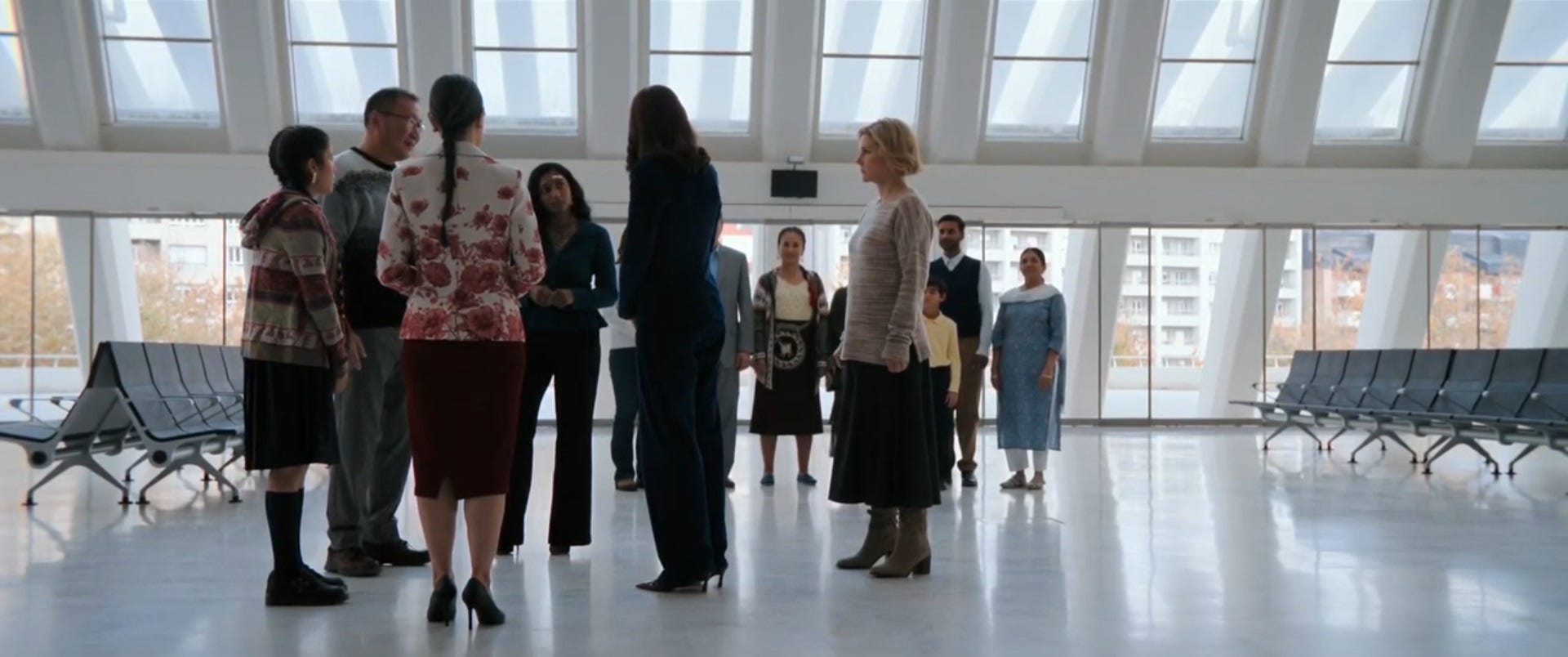
They are: Otgonbayar (Mongolia), Xiu Mei (China), Kusimayu (Peru), Laxmi (India), and Koumba (Mauritania). She is also quickly introduced to an entourage of family members who are all part of the Pluribus. Koumba is having huge amounts of sex with the Pluribus: “At present, the situation seems very nice.” Laxmi is mad at Carol for accidentally killing a relative of hers when the Pluribus crashed: “You are a horrible person.” Xiu Mei tells an asinine anecdote to Otgonbayar about zoo animals outside her house: “I say, ‘Shoo! Shoo! Go! Go!’ It do not listen to me.” Kusimayu has already decided she wants to join the Pluribus and suffer ego-death: “You don’t think it sounds wonderful? You don’t ask them what it’s like?” Eventually, Carol snaps and leaves, calling them all traitors.
There is something bitterly, cruelly contrarian and misanthropic about the back half of Episode 2, I think. We can’t blame it on staff-writer insanity, as Gilligan himself wrote and directed the first two episodes of the show. Carol is presented as hysterical, blinkered, unreasonable, insensitive, rude, and patronising. The deaths of the Pluribus during their mass seizure are a sin laid at Carol’s feet; the fact that the Pluribus have literally killed far more people during the joining and figuratively possibly killed everyone does not really factor into the discussion at all.
And from a storytelling perspective, this kind of makes a lot of sense: it’s more shocking, it provokes stronger feelings. We go in expecting Carol to find people similarly relieved to meet another human and outraged about what has happened… and, surprise, they’re all just placidly staring at her.
I don’t know, this randomly-sampled group just paints such a horrible picture of humanity. That these people don’t even seem to recognise that anything has happened to their own children, their own loved ones: as if we are nothing more than our bodies. The show, I think, deliberately others them: we’re introduced to them by Zosia speaking to them in their first languages, there’s more of them than we’re expecting, they’re suspicious of Carol, they’re comfortable talking with each other but not with her, and of course Koumba is some sort of cartoon character surrounded by Stepford Wives. They are aligned with the Pluribus, against Carol, and this makes them seem alien. Again, for narrative economy, it makes sense to polarise the cast, to have these other characters act as foils for Carol, make them as different as possible… but I don’t really think it quite comes across the way the show intends. The issue is that these people all come off as intensely stupid.
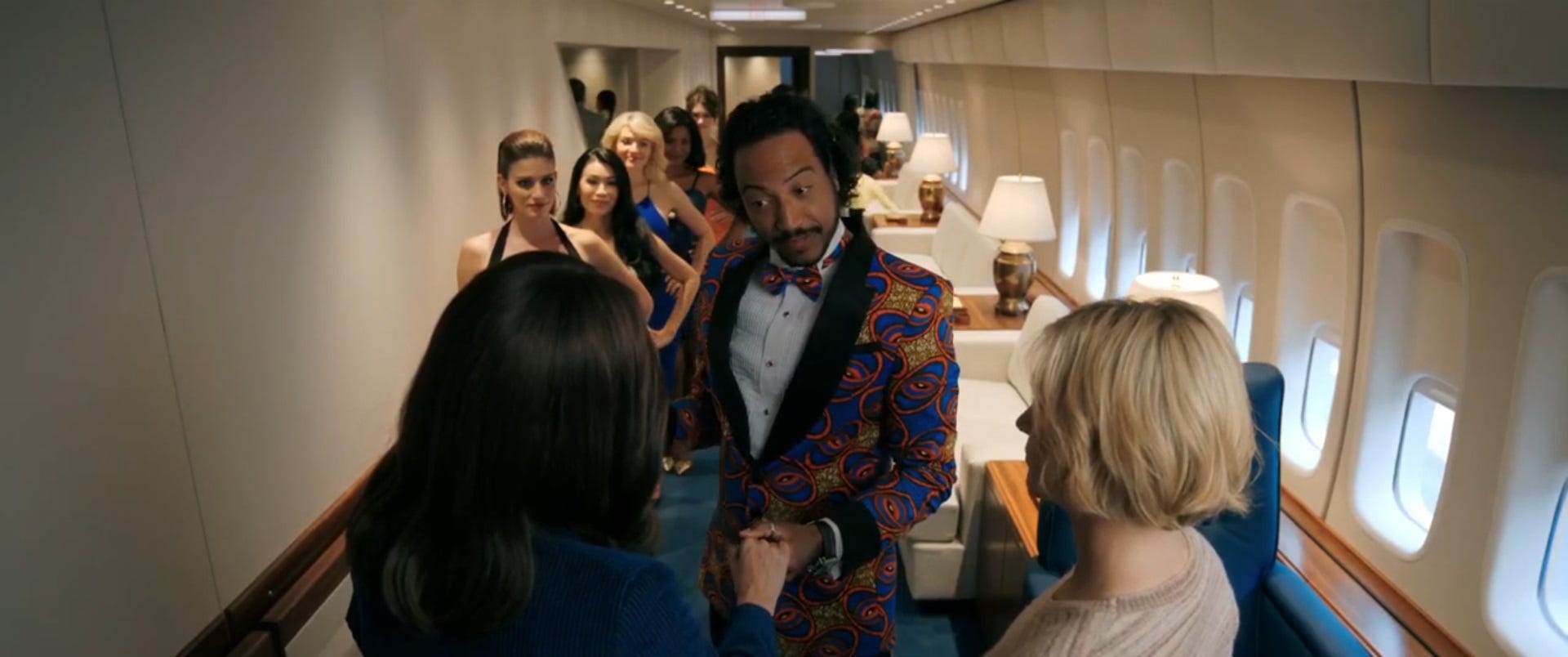
They just don’t seem to understand what has happened! They’ve had a bit of time to process, they’ve supposedly asked questions, and they’re all just operating like it’s business as usual. Koumba, we later learn for certain, is protective of his own individuality, but when Carol raises this point during the meeting, he seems to have no interest in it. Basic questions about the Pluribus’ plans for the world and their operations haven’t been asked; in fact, it’s not until Episode 6 that we learn about the mass starvation the Pluribus is going to face. But I mean hey, crime is down, so!
In the cold open for the season finale, Kusimayu is seen to willingly accept the Pluribus virus, becoming one of them. Much of this sequence is carried by chant-like singing, as though what we are witnessing is some sort of local tradition or ceremony. Except, y’know, Peru presumably doesn’t have a special tradition of huffing a gas to have a seizure and turn into a zombie? The Pluribus have co-opted Kusimayu’s culture to comfort her while she’s alone, roleplaying as this isolated village community. After she joins, they fall dead silent, and are seen dismantling the village. There’s an obvious thematic reading here where globalism is being presented as a force that appropriates and/or destroys local culture. Even though we can sympathise with Kusimayu’s grief, and can interpret her decision to join as an extremely unhealthy coping mechanism, she comes off as a sucker to have fallen for the charade.
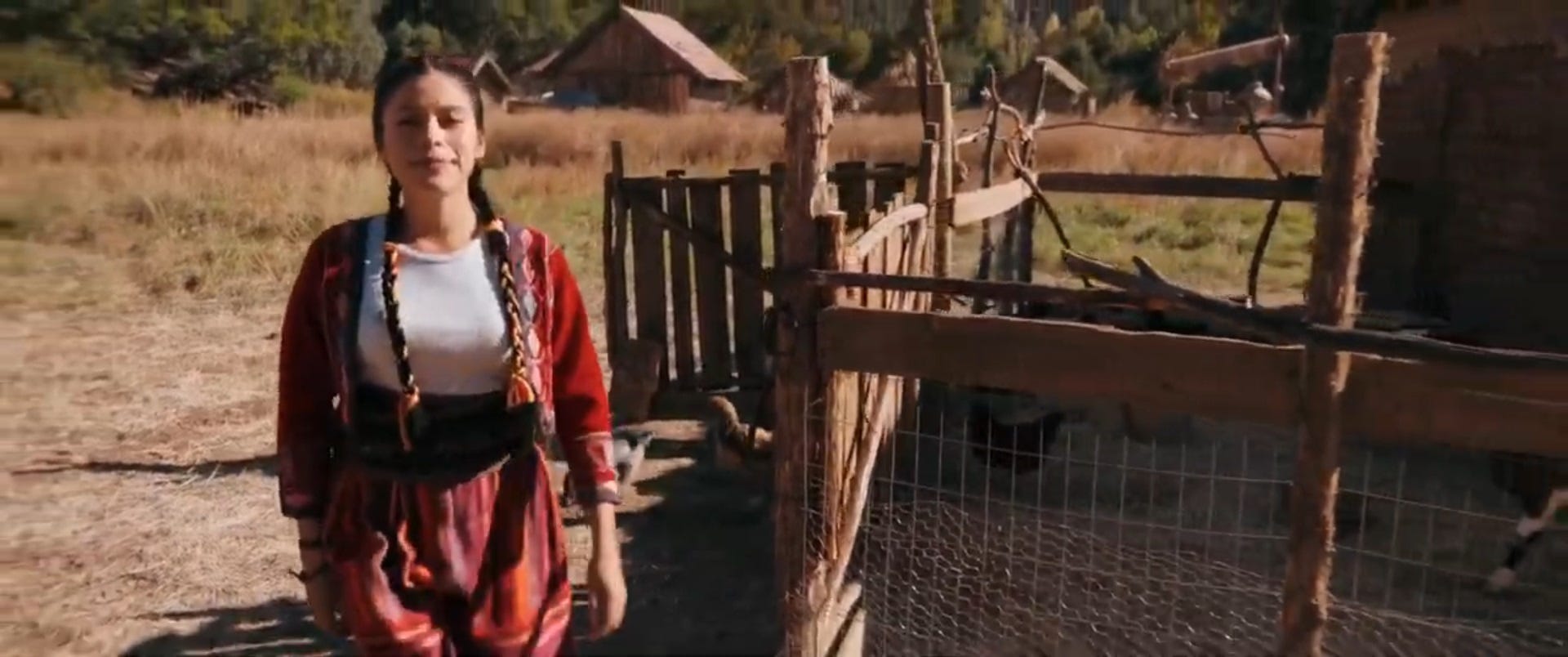
It can, of course, be argued that Carol herself is not exempt from this kind of nationality-flattening. She is often seen to embody the “Karen” archetype (as people have remarked, her name is a soundalike for this). In Episode 8, she falls for Zosia’s titular “Charm Offensive”. She comes off as intensely American.
However, simply by nature of her role as the protagonist, we are still left with a scenario where Carol needs to save the world, because the rest of the world is too weird, stupid, selfish, or apathetic to save itself. Even Manousos’ world-saving efforts mostly take the form of him looking for Carol, and he spends most of Episode 9 waiting for Carol to help him out. And I’m just not convinced that the Americentricism seen in PLUR1BUS is, well, the point of it.
VI. Red scare
Episode 9 is encapsulated by a pretty straightforward juxtaposition: the Pluribus is great at cooperating and getting things done, while Carol and Manousos are not.
One question I think the show is asking, especially in this episode, is why we humans find it so hard to get anything done. Working alone, both Carol and Manousos find even very basic problems to be near-insurmountable. The Pluribus, meanwhile, eliminates food waste, eliminates crime, eliminates war, can eliminate light pollution, and will probably solve global warming. They can bring Carol pretty much anything near-instantly, on demand. The only downside is that, uhh, homeless rates are higher than ever?
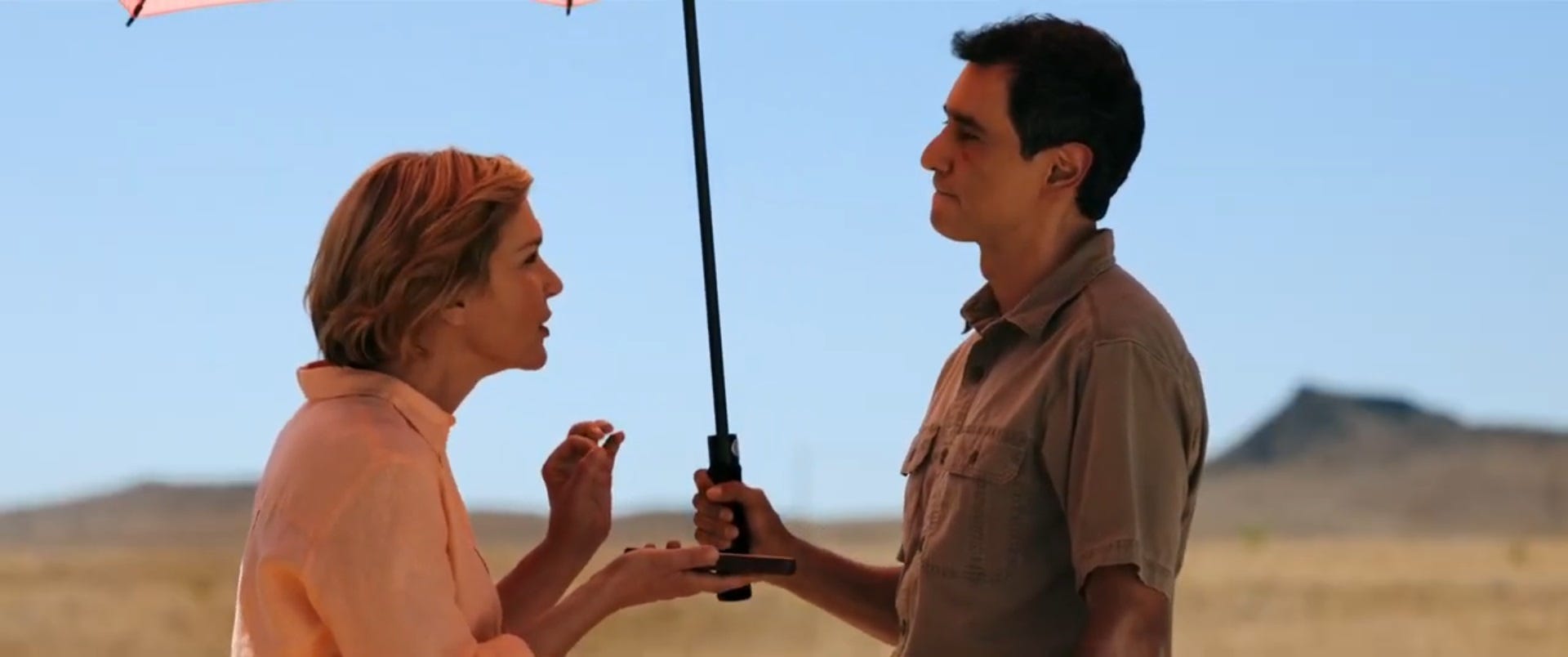
There is definitely an argument to be made, I think, that the Pluribus stands in for communism. As Zosia explains, the concept of private property has effectively been abolished. Carol (representing America) is afraid of communism as a foreign force that threatens to erase individuality and push down exceptional people.
However, I think it’s more interesting to look at PLUR1BUS with the mindset that the Pluribus instead reflects our existing capitalist society. Capitalism represents the collective effort of the entire world; it too is capable of accomplishing great things. However, capitalism does not hold that every individual has intrinsic value, except by virtue of what they give “in return”.
The resemblance is, I think, primarily aesthetic. Again, the Sprouts Farmers Market sequence is a lynchpin here. The delivery drones call to mind Amazon. The title of Episode 5, “Got Milk”, refers to a famous advertising slogan used to push sales of dairy products in the 1990s; the following episode, John Cena is puppeted as a celebrity endorsement for HDP. Speaking generally, I think one rarely associates luxury with communism, but PLUR1BUS is littered with luxury; the Pluribus is perfectly happy for Koumba to live his lavish lifestyle, and they wait on Carol hand-and-foot. Carol gets her pick of all the expensive cars and fancy paintings she likes. She plays golf, goes skiing, and has massages. With a reported per-episode budget of $15 million, PLUR1BUS is one of the most expensive television shows ever made (most of the ones ahead of it are Marvel slop where the money goes into a VFX black hole).
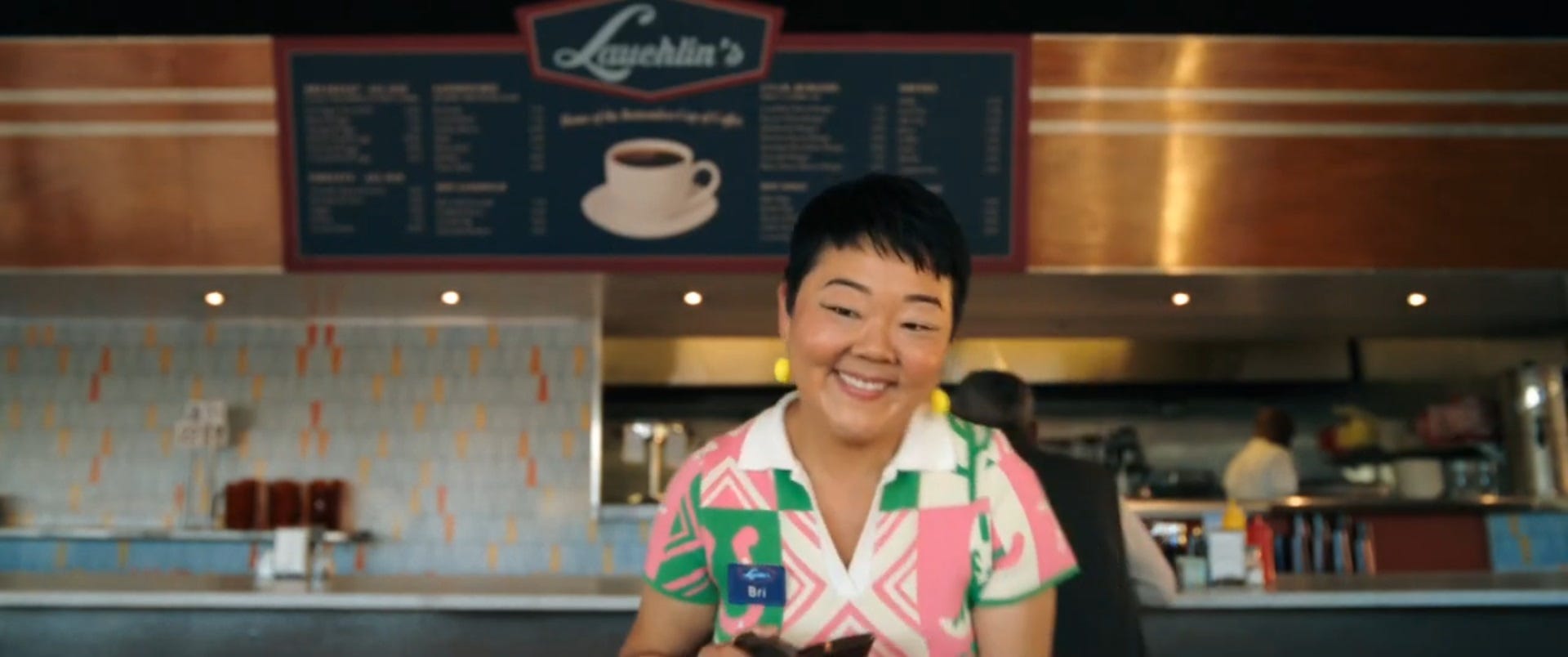
There’s dissonance, then, between the power and resources of the Pluribus, and, y’know, the fact that they literally eat people. Though Manousos is fighting to return to his capitalist way of life, his rebuttal to the Pluribus—”that’s not yours to give,” in effect—resembles the famous anti-capitalist proclamation that “property is theft”. Everything the Pluribus has is stolen. Even its labour itself is stolen—from people who otherwise would be doing literally anything else. In Episode 8, Carol is disgusted to think that her favourite waitress from Carol’s burned-down favourite diner has been made to abandon her new life, her hopes and dreams, in order to serve coffee for Carol’s gratification.
VII. Waiter! More slop, please!
In the final episode of the show, Carol is seen reading The Left Hand of Darkness by Ursula K. Le Guin, which is about a lone human visitor to a world of aliens. I’ve not yet read it but many of my friends have, and they all love it. I’ve been recommended it many times.
I wonder, if you were to ask the Pluribus for fiction recommendations, what would they look like? Obviously it would depend a great deal on your preferences. But assuming a certain degree of ambivalence on your part, would the Pluribus by default go for popular, universally-beloved works—because these would account for most of the positive feelings towards fiction generally in the collective—or obscure works, because the Pluribus is just going to randomly pick whatever obscure thing they think best matches your preferences, irrespective of how popular it was or not? Would it recommend you unpublished novels, things which have never been read before except by the person who wrote them? If pressed, would it be able to write a new story for you, bespoke?
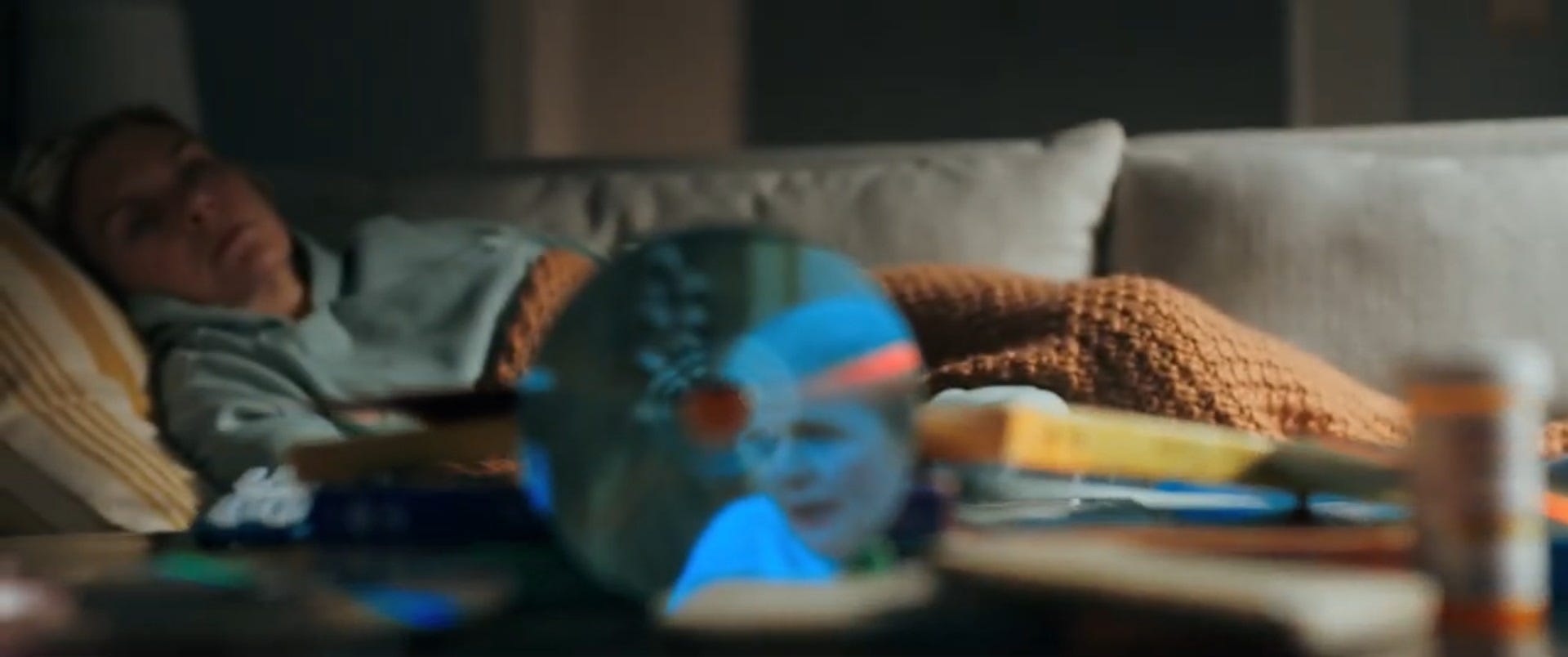
In Episode 8, Zosia expresses excitement that Carol has resumed writing Winds of Wycaro. Zosia often expresses things that resemble genuine human interest; often, she self-effacingly frames these by saying “Fun fact—”, before offering some pithy titbit about human experience and culture. The Pluribus loves Wycaro, even though Wycaro is (we can pretty safely assume) pretty bad. They love all works of art, equally, which is the same as having no particular preference for any work of art. As Manousos puts it in the final episode, “Isn’t it evil to value a man the same as an ant?” Whenever Zosia expresses some sort of positive sentiment about art, it’s with an ulterior motive; usually just to charm Carol. She is not interested in art for art’s own sake. The Pluribus do not sing while they work.
For me, it calls to mind the way we think about art under capitalism. That ultimately, stories are only worth something if someone will pay to read them. The value they have is as a distraction, as an opiate.
As is so often the case, I’m reminded of Rosie Tucker’s album UTOPIA NOW! From “Lightbulb”: “If you’re writing the record, you must want it heard.” From “Gil Scott Albatross”: “What you give to me no-one can sell.” From “Paperclip Maximizer”: “The cosmos expands […] all the better to bear all your office supplies / and the space they require was once occupied / by the sun on your hair”. From “Big Fish / No Fun”: “If it can’t be counted, does it count?” It is an assertion that some things are just invaluable, a necessary part of what makes us human, and that if we sacrifice these messy things at the altar of optimisation, then we may as well be robots.
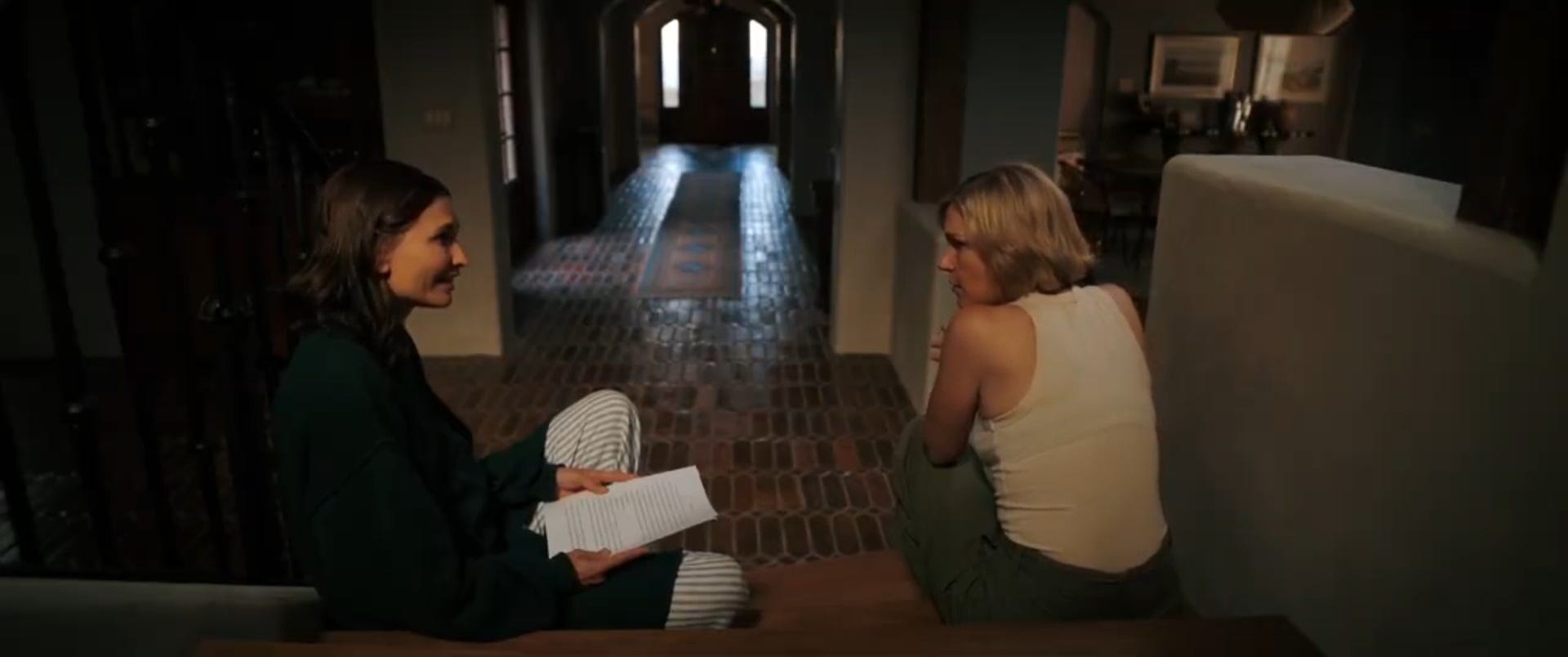
I find Carol’s profession as a writer interesting, because in many ways, it doesn’t seem to factor into the show at all. We know that Raban from Wycaro represents Carol’s own repression; in Episode 1 a fan asks if he was based on a real man, oblivious to the fact that Carol is instead attracted to women, and in Episode 2 Carol admits: “My original version of him was a her. But I talked myself out of it. And we never told anyone.” Wycaro is next mentioned in Episode 4, used to illustrate that Carol and Helen kept things from one another, as Carol asks what Helen really thought of the series and the unpublished book. In Episode 8, Carol finally starts working on the series again, seemingly just because the prospect of having Zosia read it excites her. In her new first chapter, “Raban is a woman now”.
My best guess is simply that Wycaro represents the distance Carol has always felt between herself and the rest of humanity. She is thinking of one thing, while the rest of the world is thinking of something else. It’s only when the rest of the world goes away that Carol feels comfortable writing Wycaro exactly the way she wants it to. In some ways, the Pluribus fulfils a similar need to Carol that the internet is seen to in Episode 1: she can ask it for an opinion on Wycaro (and by extension, her), any opinion, good or bad. What did they think of Wycaro? But really, what we see is that the internet and the Pluribus both are typically a reflection of how Carol is feeling: a feedback loop, an echo chamber.
The answer to the question “Is Wycaro any good?” is N/A. Some people liked it, some people didn’t, and all of these are parts of the whole.
VIII. How I learned to stop worrying and love the bomb
I’ll be real, I did NOT have a particular ending in mind for this piece. That’s why I lied at the start and claimed it was a set of “mini-essays”, even though obviously they form some kind of horrible gestalt essay. Out of many, one.
And I think PLUR1BUS itself is in a similar place? Apparently it’s planned to have four seasons total. In Episode 1, you look at the show and can immediately find yourself thinking of what the stopping-point for the first season might be. Some options I was mulling over at various points:
Carol successfully cures someone.
She cures someone, but only temporarily. (I feel like Severance did this a lot?)
They contact the aliens.
Manousos arrives, but they don’t actually interact; it’s just a cliffhanger.
The Pluribus try to assimilate Carol and she goes on the run.
There’s a violent altercation between survivors and one or more of them die.
Bear attack! I don’t know.
The actual ending of the show is… kind of a weird one! There’s a pretty solid roundtable interview Variety did, where the crew explain that the ending for the season was originally different, but changed shortly after the start of shooting for the final episode. Originally, Carol was just going to play double-agent, covertly forming a pact with Manousos while (presumably) continuing to be with Zosia. Apple and Sony asked for a bigger ending, which led the team to bring forward the idea of the atom bomb, which had been planned for Season 2.
Without having looking into any of this, simply watching the ending, I could tell there was a bit of a whiff about it. Perhaps the biggest tell is honestly just that they don’t actually show the atom bomb, in a series which is otherwise pretty happy too blow its budget and just put whatever on the screen, matter-of-factly. Presumably they couldn’t come up with a prop they were satisfied with in the time they had?

Really, though, it’s just that even taking into account that the atom bomb is meant to be a big wham moment… it still feels like a non-sequitur. It doesn’t quite seem to follow on from what we’ve seen of Carol’s headspace in the rest of the episode. For Vulture, Gilligan observed that Carol “likes a bold gesture”, and he’s right, it does feel in-character for her! It’s just the timing that feels off, to me.
Compared to Severance, another acclaimed highly-allegorical present-day sci-fi Apple TV show, with a $20 million per episode budget, PLUR1BUS leaves remarkably few question marks hanging at the end of its first season. The nature of the aliens, it now seems fair to say, is not something the show is interested in exploring. The motivations of the PLUR1BUS are pretty clear-cut, as are their immediate plans. The other survivors don’t really seem like they matter. There’s no immediate tension, no immediate crisis. It’s a strange place to leave things off. But I suppose that’s one of the things I’ve most appreciated about PLUR1BUS—its willingness to get a bit weird with it, and eschew basic formula, replicating some of the unpredictability of real life.
My only question, at the end of this season, is… what’s she gonna do with that thing, huh? In interview with The Ringer, Gilligan sounds confident that he’s got ideas for it: “I’m not as worried about paying off the atom bomb as I was the M60 [machine gun from Breaking Bad].” The obvious angle for Carol to take is to use it as a deterrent, threatening to blow up herself, Manousos, and all the nearby Pluribus unless they do as she says. Maybe she’ll try to blow up the antenna. However, it’s their very obviousness that makes these possibilities unlikely to actually pan out. If there’s one thing that Walter White, Saul Goodman and Carol Sturka have in common, it’s that they usually get exactly what they ask for—and it’s much worse than they imagined it to be.
What do you think’s gonna happen in Season 2? Drop your truth nukes in the comments below.
Hi! Thanks for reading. I had intended to share a short story today, but then I finished watching the show and wanted too make a post about it while it was still fresh on my mind. Check back next week for an honest-to-god bit of prose fiction!
This year I’m under-employed, working minimum-wage part-time, and I dearly need your help if I’m going to be able to continue my current level of output. Check out this page to learn about how you can support my work without spending anything. The main thing you can do, though, is sign up to receive emails for my future posts!
Lizzie has called my attention to Logistics, the longest film ever made, clocking in at 51,420 minutes (5 weeks), which retraces the path of a pedometer from its point of sale back to its original production line. It’s like, great idea guys, but it turns out that all you need is $135,000 and you can cram that whole theme into less than nine hours. Huge waste of time!
In case you can’t tell, I rewatched Breaking Bad much more recently than I watched Better Call Saul. I’m sure if you look harder you’ll find lots more examples.
“Pluribus virus” yields the handy portmanteau, “Pluribus”.
This is completely irrelevant, but while I’m here talking about webfiction… all the bits where Carol is ostensibly the only person in the world who can save humanity, and she’s just sitting on her sofa watching TV, remind me of this bit from Benedict’s 2018 NaNoWriMo draft Dave Scum:
Hey, if we’re doing full disclosure: maybe I made it seem like I was just running from place to place, doing hero work constantly? Because… no. This shit took weeks. Most of that time wasn’t spent on actually solving the goddamn problem, or anything. You wanna hear about the cycles I spent sitting in my apartment, playing through every game in my backlog? You want me to give you a ten-page report on every single time I gave up and let the world end?
Good story, that one.