
ENCORE - commentary
behind-the-scenes on my short story about the longest open mic night ever

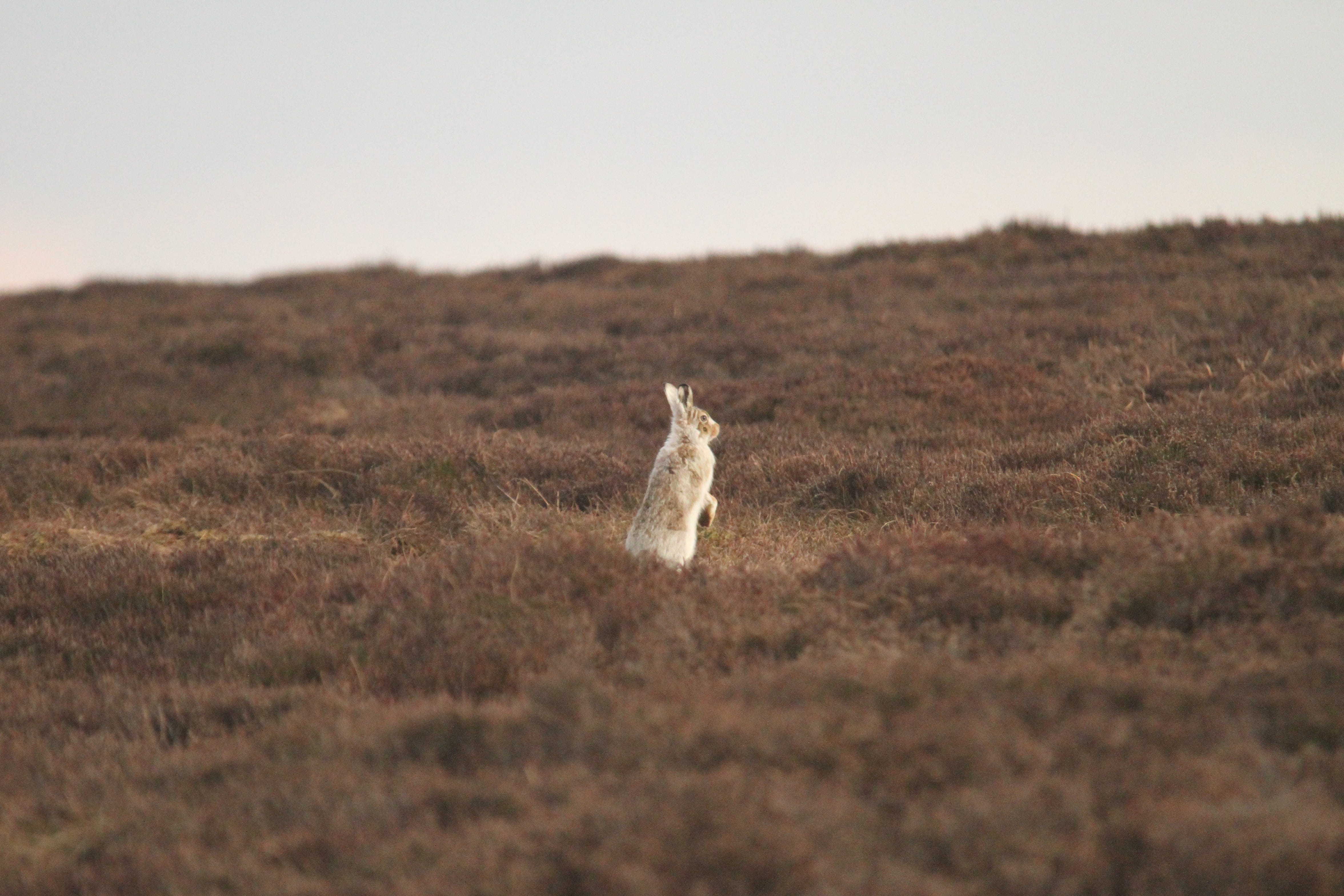
People keep telling me to submit to competitions. Last year, Lizzie found this national one for Scotland. We were looking at some previous winners and it seemed clear to us both that we could do better. I didn’t have any immediate ideas. As usual in situations like this, I mentally ran down the ol’ list of unrealised concepts—pitchposts, etc, ideas that I’m fond of but haven’t been able to do anything with. Weirdly, I had one that seemed like it could actually be a really good fit.

The thing to understand which explains the most about “Encore” is that the idea was originally for a chapter of Like an Arrow, a Doctor Who fanfiction I started writing during university. See, a recurring thing about Doctor Who—which I would describe as the thematic core of Like an Arrow—is that the Doctor doesn’t do anything. He doesn’t un-sink the Titanic, he doesn’t do a damn thing to undo all of the suffering in history, despite the very mechanisms of the episodic-level events of the show really giving the impression that, as a time-traveller, he should be able to. There’s this episode, perhaps the best episode of the show, “The Fires of Pompeii”, which explores this tension. I intend for Like an Arrow to be like that episode, but unburdened by the fact that it’s in continuity with a bunch of pure shite. The question, though, is what historical event should serve as the focal point for this theme, if not just Pompeii again. It’s not really something I’ve been able to resolve.
“Encore” would have been one solution, though. The idea was that instead of couching it in real-world terms, in terms of a ginormous horrible thing which we know to have happened, it would instead go the total opposite direction: to the micro level, something which basically just doesn’t matter in the scheme of things, for which there is no evidence that it ever happened one way or another. A totally fictional event. Something swallowed up out of history, like something out of There Is No Antimemetics Division. And because I draw inspiration from what’s around me, and at the time I was semi-regularly going to this bar that did folk music sessions, I had this idea for a single folk session dropped out of history.
In large part, “Encore” is riffing on that one tumblr post—which has gotta be one of my favourite posts of all time—that goes like:
i just listened to all the music thats ever been. my favorite was a song a little girl sang to her cat in greece in 1286. my second favorite was from a ceremonial performance in modern day ethiopia, from 22000 bc. i also liked STEELY DAN.
This post, as written, is I think one of the best steelman arguments (steelydan arguments?) in defense of the Doctor from Doctor Who. It also rhymes with the ending of Puella Magi Madoka Magica, where the fantasy is that someone can go back through history and make it so all the young girls who died suffering and alone… didn’t? It’s also similar to monotheistic belief in an omniscient, omnibenevolent (but not, I suppose, omnipotent) God. Look, I know this is stupid, but I do in fact find myself extremely moved by the idea that a little girl singing to her cat in Greece in 1286 actually mattered, that her song was inextricable from a causal chain of events that has given rise to all goodness that has ever existed and will ever exist. That even if no-one else saw it, it meant something.
“Encore” is, to me, a horror story (Doctor Who is, after all, a scary show, and the Doctor is the one consistent presence in it, making him the scariest Doctor Who monster of all). It takes the guy from the Steely Dan post and turns him into a slasher villain. In the story, he talks about this musician, Paul, as if his omniscience of Paul was what gave Paul’s life value and purpose. In reality, Paul has causally isolated Paul from the rest of humanity. What Paul does exists in a true vacuum.
The framing device of another of my favourite Doctor Who episodes, “Before the Flood”, uniquely sees the Doctor break the fourth wall to explain the mechanism of a bootstrap paradox. In it, he hypothetically describes going back in time to visit Beethoven, only to discover that Beethoven doesn’t exist. In this thought experiment, the time traveller remembers all of Beethoven’s songs, so he goes on to “compose” them, effectively becoming Beethoven. Eventually, the Doctor asks—“Who really composed Beethoven’s Fifth?” This episode, I think, really touches on the inherent darkness of time travel, and of revisionism in general. There is a spookiness to the fact that Beethoven has disappeared. There is dishonesty in the way that the time traveller passes off this work as his own, when really, it appears to have been burped up by causality itself.
But in the rest of Doctor Who, we see this kind of thing all the time. The Doctor and his companions are constantly running into famous figures, coining phrases, “inspiring” great works, and generally just writing themselves into history. From a Doylist perspective, this is because these “I know what that iiis!” moments are kind of the whole point of writing a time travel story! But on the Watsonian level, taken in aggregate, it paints a very troubling picture of the Doctor. What is the point of all of humanity’s struggle, if one’s success or failure is really just contingent on whether the good ol’ Doctor was there to give you a hand? It is, in effect, the “ancient aliens” trope playing out on a planetwide scale.
So, this was the idea that precipitated “Encore”. I actually wrote a few paragraphs of an interlude chapter for Like An Arrow using the premise, which I’ve reproduced below.
I love music. To take all of the chaos of the universe, the tiniest vibrations of matter, and turn it into a sound that makes you feel something… it’s remarkable. I’ve heard the earliest ululations of your distant ancestors, and I’ve heard the quantum rock of your descendants. I’ve sat in on the Beatles’ recording sessions, I’ve rap battled with Stormzy. I’ve heard composers like Mozart, Beethoven—what you would call classical music, I suppose, but it’s all classical to me. I once spent almost two years attending all 96 Glastonbury festivals back-to-back. So believe me when I say, nobody does music like you humans! Although I should say, Daft Punk are very good, as robots go.
The best musician in human history, though, was a 56-year-old man from Leeds named John Trevor, who was found dead in his flat on the 16th of January, 1975. I was there at the time investigating a spate of murders being committed by the Blathereen mafia, but it turned out that the man had committed suicide, completely by happenstance. Up until his death, the poor gentleman man hardly left his home—but once a week, he would go out to a local folk bar, and play the guitar. I wanted to pay my respects, so I travelled back in time a few days to see his last performance.
It was a small, run-down bar, and it was a Monday night, so I hadn’t expected to see many people. But to my surprise, the bar was packed that night—I mean it was a full house. The musicians are seated in a circle at the very back, passing around this old guitar. There’s only three of them, and they don’t talk much, they just play. John plays four songs that night.
He first plays a cover of “Hares On The Mountain”, a folk song popularised by Shirley Collins sixteen years prior. His version seems to have been learned much earlier than that, as it features distinct verses, lacking the introduction Collins incorporated into her version. John’s voice fills the room. His fingers caress the strings like waterfalls, and not a single note is out of place. He sings at the quarter-full glass of stout on the table.
That was all I wrote, in July 2024, and I shelved the idea. The main problem I had with it was that Like An Arrow is otherwise trapped entirely in his companion’s perspective. I would need some sort of framing device to incorporate this anecdote into the story—it’d be a whole chapter of the Doctor recounting this experience to his companion. I don’t know, it didn’t quite work.
So, back to the competition! This, I think, explains most other aspects of the story. As I say, the competition was based in Scotland, and so I wanted the story to essentially have some kind of Scottish bent to it, and dropped the Like An Arrow version’s Leeds setting. In keeping with this idea of a time-travelling tourist, I decided to set the story in Edinburgh, the biggest tourist destination in Scotland.
As mentioned in the story, one of the most famous things about Edinburgh is the Fringe, a big comedy festival that happens every year—with music, theatre, etc—and basically takes over the whole city. I’ve been in Edinburgh during festival season and it is truly inescapable: everywhere in the city is plastered in flyers, every pub is mic’d up, and throngs of people clog the streets. The locals, so far as I can tell, seem to fall into two camps. Many of them love the Fringe—they like the buzz it generates, they like living in a city of culture. Conversely, a lot of people hate the Fringe—they hate the way people treat Edinburgh like a theme park, they hate the noise and the crowds.
This, to me, can also be read as a microcosm for broader cultural hysteria in the UK surrounding immigration, and the fierce tribalism that characterises our local areas. In Scotland there’s a big meme about how Edinburgh is basically part of England. What it boils down to, I think, is the dichotomy between “people like me” and “people not like me”.
What I wanted to achieve with “Encore”, I guess, was to write a story that could simultaneously be read as pro-Fringe and anti-Fringe, depending on how you look at it.
In the anti-Fringe lens—which I think comes most naturally, given the facts of the story—the nameless narrator is a tourist, descending on this local scene, and over time insidiously driving out local people. His inability to understand Paul or the songs Paul plays are an expression of his fundamental incompatibility with the local culture. I say “his”—I think of the narrator as a he, but this isn’t specified in the story, where in fact we see him take the form of both men and women.
In the pro-Fringe lens—which I prefer—the narrator is a local, resentful of others who he doesn’t understand, wishing he could replace them all with people who think exactly like him and want what he wants. His inability to understand Paul represents his incuriosity and closed-mindedness.
However, in addition to the lens that’s engaging with prior time-travel media, and the lens engaging with tourism, there’s a third, more metatextual lens that I had in mind, concerning art and audiences in general. Something I think my posts reek of, especially these days, is a general frustration that I haven’t “made it” yet, that nobody’s seen the stuff I do online (not that I do anything) and said, hey, you’re very good actually, would you like to spend more time doing that, and have more than a small room’s worth of people looking at what you’re doing? “Encore” presents an excuse for languishing in artistic obscurity in the form of a horrible nightmare where the whole audience is effectively a gaggle of alts for a single stalker fan who wants you all to themself and will never share your work with anyone else. It presents a scenario where, quantifiably, nobody will ever correctly interpret what you’re trying to express, no-one will ever “get it”.
I sort of don’t love this lens. I think it’s horribly self-serving.
The story was written basically in a straight shot, though obviously it recycles and re-shuffles a few bits from the earlier draft. Despite having a fairly restrictive wordcount to work towards, I didn’t feel like I was leaving anything on the cutting room floor—instead, conscious of it from the start, the narrator’s voice was pitched to be kind of clipped and matter-of-fact. He often glosses over things.
Again, because I was writing this for a competition, I actually specifically pitched the story to get past the slush reader reading it—that’s why the story begins the way it does, with the narrator asking these rhetorical questions about music. Originally, the third sentence was, “C’mon, I know you’re already working on a shortlist.” In retrospect, perhaps I was being too cute.
When sharing “Encore” on social media, I repurposed this fourth-wall-breaking intro in an attempt to replicate something Alexander Wales has been doing a lot on Tumblr, where he’ll present a piece of microfiction without any preamble, tricking the reader into thinking it’s an ordinary opinion post, before making the fictional conceit apparent. Often I would cut the first line, which is too rooted in the narrative voice, and I’d often cut a few of the example musicians. Unfortunately the posts went over like a wet fart like everything else I do. I need to up my non-shilling posting game if I want strangers to care about my writing, I think.
The list of names was intended to create a sort of flattening of history. I wrote this story before Sinners came out, but I guess it’s kind of like an evil version of the music-ghosts scene. Something to note about the narrator’s framing of the “greatest”, “best” musician, is that he’s clearly setting up popularity as a metric, because he thinks it’s unfair that Paul is languishing in obscurity. He views Paul as being better in some ineffable, objective sense, but a key thread throughout the story is his failure to remotely communicate what it is that makes Paul special.
The “Penelope Telephone” namedrop, which crops up again in the second half of the story as “Penny Telly”, was a textbook case of me having the beat in abstract, and coming up with exactly what I needed to fulfill the beat, no more. All I needed was a name. I wanted this artist to be female, because nearly all the other artists mentioned were male. Her surname comes from Sebastian Telephone (and his sister, Jessica Telephone) from Blaseball; after writing End of the Earth, I’d been listening to Blaseball: The Musical again. I liked the idea of this looking like a stage name, but plausibly just being a weird future surname. The name “Penelope”, meanwhile, was actually a corruption of “Persephone”, from the Sidney Gish song of the same name, which begins: “I’ve called Persephone / By the name purse-a-phone”. So it’s meant to be kind of a Lemon Demon thing where it trips up your brain, because the letters of Penelope and Telephone are similar, but it’s pronounced differently. Until extremely recently, Googling “Penelope Telephone” would bring up videos for “Sissy Maid Training”, which nearly made me change the name to something else, but I couldn’t come up with anything better.
The date of the 22nd of December, 2022 (a Thursday, if you were wondering) was chosen to place it close to Christmas, and close to the COVID-19 pandemic without actually having the pandemic materially affecting the story’s setting. Being at a bar near Christmas is a classic signifier of loneliness, which applies to both Paul and the narrator. The pandemic was similarly characterised by isolation. It was important to me that the story was set in the present, because the idea is that Paul has dropped out of our lives, in our lifetimes. This guy coexists with us.
The lime soda, the narrator’s signature drink, which appears twice in the story, is something a friend of mine tends to order these days, as he no longer drinks. Technically, it’s “lime and soda”, which is probably how I should have rendered it in the prose, but we sort of swallow the “and”, so it’s just “lime soda”. I love a good lime and soda, but I do think it represents this inherent tension when you’re going out without wanting to drink, because it’s basically the cheapest thing you can order and means that you’re somehow not engaging with the raison d’être of the bar. Like it just doesn’t register. You may as well be drinking water. So the narrator, who can never fully sincerely embed himself in the bar, even after buying it and replacing everyone in it, orders this formless drink. The fact that he seems to copy the drink order from the guy in front of him (actually himself) is actually another tiny bootstrap paradox in the story, so that’s cute. Probably his other iterations are having to drink alcohol for cover.
The sentence “The condensation obscured the contents of the glass” is one I remember adding in an early edit pass, and I still don’t like it. The story is otherwise quite precise, but this sentence does nothing except provide a sensory image. Condensation is something I associate very strongly with the bar experience. But there’s just no deeper significance to it. Lame.
When the narrator describes the musicians, he uses the word “lass”, which serves both to gender him (it’s more something men say) and give him a Scottish accent. However, my intention was very much for the character’s Scottishness to be affected, superficial, conspicuous when it does crop up in the prose. One of the girls is said to be French, the first of several instances of people being referred to by their nationalities, to introduce this theme of nationalism. This does lead to the funny unspoken implication that either you can change your accent in the future, or that the narrator has painstakingly learned to imitate a French accent for the sake of these shenanigans.
Paul is based on a guy I saw at the first open mic I ever tried to play at (an unmitigated disaster), who genuinely looked like Santa Claus. He rode a bike around town and my lime-soda-drinking friend once pointed him out to me as the conspiracy theorist who keeps gluing COVID-19 misinformation flyers all over the city. At one point, my friend was dead set on pulling down these flyers whenever he saw them, but eventually he got worn down. If a man is operating under those kinds of delusions you will literally never be able to out-doggedness him. I’m not convinced this was the same guy as the open mic guy, but I’m compelled by the idea that they were the same, and this informed Paul’s characterisation as kind of a sad, lonely, bitter, and probably quite problematic old man. The Like An Arrow draft named him “John Trevor”, but that was clearly just a placeholder with no particular meaning; I ended up going with “Paul” after Paul McCartney and Paul Simon. The description of him singing “like Father Christmas himself might sing” was me ripping off the recurring bit from Chili and the Chocolate Factory: Fudge Revelation where the narration notes “His voice sounded the way good chocolate tasted”, except obviously that’s much better.
Anyway, so Paul is noted not to speak to the audience at all, and in fact we never see him speak, though the narrator does recount a few scant conversations they had. This was done to render him opaque to the reader, but also to get at an idea that’s really important to the story—that on some level, Paul can tell the people he’s surrounded by, uh, aren’t real ones. He’s not interested in talking to them. He wants to play music, which is clearly important to him, but he believes himself to be alone in a world of non-people. Which in his case is literally true, but I feel like this is a mindset I see all the time in old men like this in real life.
Both of the songs the narrator actually names for the reader were ones I discovered at folk sessions, and immediately fell in love with. One thing the story gets at—which I find funny, because maybe it’s the one instance where the narrator is aligned with me—is that there just aren’t good recordings of these songs online, at least not ones where the songs are played the way I want them to be played, which is the way they were played at the folk sessions.
“Halsway Carol” ties into the time travel concept, because it’s a modern song written in an older tradition, which I think mirrors the way the narrator insinuates himself into these past timeframes. In real life, the song is about winter, with the approaching “longest night” of the solstice. It’s trying to find beauty in what’s ultimately a difficult few months. In “Encore”, I recontextualise the song to extract some different meanings from the lyrics. The narrator’s interpretation is that the song is an ode to the B-side, the cover, the ostensibly-lesser. Paul is likened to the moon, as his face is “cratered”. The song says the moonlight is clearer and brighter than sunlight, but obviously in a rational, scientific understanding of the solar system, we know that moonlight is actually just sunlight reflected. So instead of viewing moonlight as its own, ineffable thing, the narrator views it as this process of repetition, reinterpretation. However, the recurring mention of the “longest night” serves a greater purpose, outside the narrator’s perspective: it alludes to the time travel used to stretch this folk session so unnaturally, and to Paul’s impending death. The narrator describes “Halsway Carol” as “nothing special” from a compositional point of view, but all we see of the song are its lyrics, which clearly aren’t what has attracted the narrator to this performance; so again, it’s unclear what’s so special about Paul.
The narrator complains about someone entering the bar midway through the song, interrupting it, but of course we later find out that this is none other than the narrator’s own future self. He’s sort of… stealing from himself?
The second song, “Hares on the Mountain”, is slightly more interesting. This one’s a genuine folk song that varies a lot depending on interpretation. In particular, it often seems to be cannibalised together from different, older folk songs, which (in my view) have mutually-contradictory themes. There’s an online reference for this song which lists a bunch of variations, and notes from various artists, many of whom do not seem to understand the song—which, to be fair, makes sense, because the song’s muddled origins complicate what would originally have been a clear, obvious message.
The Shirley Collins version breaks down into three sections:
The opening verses, “Sally My Dear”, are sung from a male perspective, with a guy professing his love to a girl repeatedly, only for her to turn him down.
The middle verses, “Hares on the Mountain”, are the central conceit of the song. In this version of the song, it’s recontextualised as the continuing dialogue of Sally. She describes men turning into “hares”, “fish”, and “blackbirds and thrushes”. The metaphor is generally that women would be hunting these men, in the same way men usually pursue women.
The final verse, “Frisking and Fooling”, then seems to morph into the inner monologue of Sally, deciding that men are trouble and that she should “attend to [her] schooling”. This verse is cloyingly didactic.
Some versions switch the genders of the “Hares on the Mountain” section, with men pursuing the women, which I imagine is probably how the song originated? Some incorporate a section called “Knife in the Window”, which is about young lovers having clumsy sex, ultimately conceiving a child. There’s apparently a section called “Crawling and Creeping” which is from the perspective of a guy committing sexual assault.
Frankly, any section of this song apart from “Hares on the Mountain” is garbage, and many of the variant lines added to the “Hares on the Mountain” section are also garbage. However, the extraneous verses often introduce this sense of unwanted male attention, which to me provokes the most compelling interpretation of the “Hares on the Mountain” section: that it’s a revenge song. Rather than hunting as a cutesy metaphor for romance, it becomes literally about women hunting down and killing men. So the central question in the refrain, “How many young girls?”, becomes this rhetorical point of the scale of misogynist violence, around the world, across history. And because the idea of this magical transformation at the core of the song is, ultimately, fantasy, it alludes to this sense of powerlessness. You can’t just kill a guy, not even if he deserves it.
To bring this back to the story, we basically have to consider what I was saying about the motif of historical revisionism as seen in Doctor Who and Madoka Magica: that in the narrator’s worldview, it is impossible to change anything, to fix anything, to make anything better. Everyone in history is powerless, him most of all.
Now, the question is to what extent any of this was legible in the story itself! I imagine not at all. You really have to know (or look up) “Hares on the Mountain” to stand any chance of having this lens in mind. If you’d done the same for “Halsway Carol”, it’s not like the story would really have rewarded you. And of course, because we don’t see which lyrics Paul is using, it’s impossible to say for sure what interpretation Paul intended. What I do think comes across is my suggestion that the narrator’s interpretation of the song—that it’s just a risqué song about young love—is evidently not what Paul was going for. Which, for me, leaves the more feminist interpretations of the song. I think that this creates an interesting tension with Paul, where it’s like, okay, he’s a feminist, sure—but he’s also this bitter guy who seems to hate outsiders.
There’s a mixed metaphor where I describe Paul’s strumming as being like “waterfalls”, “untameable”. What I actually meant was that Paul’s strumming is like wild horses. I once saw a musician play a song at a folk session with a technique I’d never seen before, basically playing the guitar like a harp, and it was like his fingers were galloping over the strings, but in a much more gentle and ethereal way than that verb implies. That’s what I was imagining for Paul. I struggled to put it into words and ended up mixing my metaphors slightly.
Paul is described as “a heartbroken teenage girl in the body of an aging alcoholic”, which together with the central conceit of “Hares on the Mountain”, serves to again foreshadow the shapeshifting the narrator employs in the back half of the story.
The narrator’s remarks on the young couple are inspired by a bunch of freak occurrences when Lizzie and I first started dating, and no less than three separate old men catcalled us in the street to give me unsolicited advice. Bro I did not ask!
One of my favourite sentences in the story is “Paul’s third song was even better, the best of the four he sang that night.” It’s like, any hope you have of understanding what’s special about Paul dies with this sentence. The choice to skip his third and fourth songs was, on a mercenary level, driven by the word limit for the competition—but of course, if I’d wanted to, I could’ve just said that he only played two songs. I liked the idea of withholding two from the reader.
Silverknowes Beach is a real beach near Edinburgh. I looked on Google Maps and found a couple of options near the Firth of Forth, and felt like Silverknowes sounded much better than Cramond. The cover photo for the story is one I stole from Reddit, sorry. I also considered various options for photographs of mountain hares—like the one at the top of this commentary—and of folk bars, but there was nothing remotely as striking as this photograph of the tide-swept shore.
Although Paul’s death is presented as the inciting incident for the narrator’s obsession, I intended for the reader to eventually come to think that perhaps it was the other way around: that Paul was in some way conscious of, or at least isolated by, the narrator’s fraud in the past. We can observe that the first/last performance is different from all the others, because loads of people suddenly show up. Perhaps it’s this audience that somehow leads Paul to take his own life. Again, we can’t really know, because the narrator does not understand Paul at all. The narrator’s admission that “I was there” serves to connect him to Paul’s death. While the narrator may not have deliberately killed Paul, it’s obvious that as a time traveller, he chose not to save him—believing it to be impossible—which is basically the same as killing him, in a trolley-problem sort of way.
I suppose this is when I should lay out, in plain terms, what my working model of time travel was for this story. In Doctor Who, the model is that you can sometimes, sort of change history, but there are also “fixed points in time” (a concept introduced in “The Fires of Pompeii”, I think), which cannot be tampered with. Basically, as the plot requires. This is the show’s explanation for why the Doctor doesn’t un-sink the Titanic or whatever; as a Time Lord, he has an innate sense of what is or isn’t possible. But this is kind of a nonsense narrative conceit! Speaking in terms of thermodynamics, there is no difference between the future significance of the sinking of the Titanic and the flapping of a butterfly’s wings.
In “Encore”, the narrator at least seems to interpret his own time travel like the Doctor does: he can’t interfere with anything that would have impacted his past self’s decisions, but anything that he was ignorant of is basically fair game. As in the Beethoven thought experiment, it’s open to interpretation whether there ever was, in all of overwritten causality, a December 22nd where that many people naturally turned up at the bar and saw Paul play. We only see a final, self-consistent timeline, where the narrator plays the part of every single person in the bar. Some readers have suggested that the narrator should cotton on pretty quickly as to what he’s doing, which surely would break the time travel, but I think that’s a misread: the narrator quickly realises everyone in the bar is him, yes, but so long as he carries on and plays out that part invariant of his knowledge, there’s no paradox. Readers have also questioned his insistence that making a recording wouldn’t work. They’re right to question this!
The key thing to understand about time travel in this story is that although the narrator thinks he can’t change the past without destroying the universe, it’s unclear why he believes this. If there was any precedent for this, the universe wouldn’t exist in the first place! No, the narrator makes a choice, of his own free will, to travel back in time like he does. But when he first arrives in the bar, surrounded by strangers, he could still make the choice never to come back. And if he did, then all of those people in the bar—who he already knows to exist—would have to be full, real, actual individuals embedded in history, as opposed to his doubles.
Perhaps we can say that the narrator’s own character is what decides the circumstances he finds himself in when he first time travels. If he didn’t hold these beliefs about time travel, and he wasn’t the sort to nurture such an obsession, then perhaps he would’ve arrived to a near-empty bar. Perhaps Paul wouldn’t have died the way he did. Or perhaps the bar would still have been full, but of different, real people.
What we see with the narrator is a solipsistic drive to make other people like himself. The first time he experiences the 22nd, he resents the other people in the bar, and decides that they don’t appreciate Paul. Believing that he, more than anyone, appreciates and understands and enjoys Paul’s music, he eventually gets every seat in the room. You can think of him as the ultimate scalper. The ultimate, “My favourite band? Oh, you’ve probably never heard of them.”
Paul’s “hibernation” was inspired by a regular customer at my job at the time. He was easily the friendliest of the regulars—indeed, perhaps the only friendly one—but he was getting on a bit, with white hair and a gappy smile. During the summer I noticed that he hadn’t been in for several weeks, and my immediate worry was that he’d died.
It turned out that he simply found the city to be too busy during the summer, with everyone out in the streets. He started showing up again in the autumn, and that was the term he used, “hibernation”. So you can see that the narrator’s anxiety over Paul’s disappearance was drawn from life.
I wanted to create a kind of snowballing effect in the back half of the story. In the short film adaptation, you can imagine a montage of quick cuts, punctuated by whatever the time travel mechanism looks/sounds like, getting faster.
The exact mechanism of how the narrator is travelling in time and disguising himself as these people is left a little vague—again, serving his character—but that’s really downstream of the story’s conception as Doctor Who fanfiction. The original idea would be that each person in the bar is another of the Doctor’s faces, and that this night is one that he revisits once every lifetime, and that this is how he knows he has a finite number of regenerations left (though of course, he could simply stop going to the bar). After that aspect of the story was dropped and I actually wrote it, the draft I submitted to the competition made no effort to explain the specifics of where the narrator comes from. Before sharing it online, the most substantial edit I made was to explain that “plastic surgery” is used to change the narrator’s face. The idea of having an ungodly number of cosmetic surgeries feeds this idea of the narrator as someone obsessed and inauthentic. The idea that he can do this without any fear over ill health feeds this idea of his omnipotence, that he comes from a future time with advanced medicine, which he could share with everyone suffering in history, if only he chose to.
Anyway, here are a handful of sundry references that crop up towards the end of the story:
The bit about spending eleven years in feudal Japan was almost certainly inspired by “Eminem becomes a Second Century Warlord”. You can just, like, imagine that’s exactly how it went. I specifically chose Japan because of the “Place, Japan” meme, because that was how I thought of the narrator (again, thinking about the Doctor’s whole teeaboo thing). Back when I lived with my parents Glastonbury would be on every year. I guess the idea of there being a finite number of Glastonburys was funny to me.
There’s a song I like, “Unseen Girl”, by Emily Brown, and that phrase inspired the bit where the narrator describes the “unseen man occupying the bathroom cubicle”. “Unseen” is just a really good word.
I really liked the idea of the sci-fi conceit of the story allowing the narrator to take a second job at the place he already works. For some bizarre reason I’ve always been a bit obsessed with the idea of compound interest over extreme periods of time, for stories involving time travel or immortality. I definitely stole the idea from some pre-existing story, but I can’t remember which.
I think that the exact phrasing, “In the ‘60s”, was drawing from the Daft Punk song “Giorgio by Moroder”, where the iconic sampled monologue says, “I wanted to do an album with the sounds of the ‘50s, the sounds of the ‘60s, of the ‘70s, and then have a sound of the future.” Ever hear of Daft Punk? Sound of the summer.
The line where the narrator wishes he could become Paul’s “glass of stout” is based on the Orla Gartland song “Madison”, where she sings, “Can I be your sister or your daughter / or your houseplant in the corner?” That song is real as hell.
The story’s ending was relying on a level of control over the reader that I’m not sure I quite achieved with the rest of it. Going all the way back to the beginning, “I know you’ve already thought of names,” I wanted to be actively engaging with the reader. But I know a lot of readers are quite passive, happy to let the story’s train of thought fully overtake their own. So I wanted to gesture in this direction of Paul being a future version of the narrator, but I’m not sure I foreshadowed it quite enough. It’s like, at the exact moment the twist ending would happen, it gets undone, and in fact the twist is that there is no twist, which is more horrible.
The final line of the story is one that I can see so clearly in the short-film adaptation that exists in my mind. Just this montage of over-the-shoulder shots of different people, walking towards an open garage, or a campfire, or whatever, where people are playing music. The monster yet lives! It’ll get you too!
The dinkus used at the story’s halfway point, and at its end, is, of course, a musical repeat sign.
So yeah, that’s basically the long and short of it! I really hope you liked this one, I’m very fond of it. Whenever I sit down to write a short story I’m always aspiring to write something as good as Ted Chiang’s shorts, or as good as Remy’s, and obviously it’s not, but hey, it’s not nothing either.
I didn’t win that competition. Actually, the entry that did win wasn’t as bad as the previous year’s—it has a fun idea to it, a good ending. I can see why it won. But you can kind of just see the whole story from the end of the first page. There’s nothing in it that isn’t, y’know, stated plainly, there on the page. I don’t know. I look at it and I just get, like… why bother?
It’s been forever since I went to a folk session last. I just sort of felt like I sucked, I think, like every time it came around to me, everyone was being polite, but really they were just waiting for the next musician. So I haven’t been back in ages, and I’ve mostly stopped playing, and, yeah.
Writing and submitting “Encore” was, I think, what led to me creating this newsletter this year. I was looking back at years of writing that I’d done basically just for other people, basically always with the mindset of, “if I can just put myself in this mould, then everything will work out and I’ll finally be free”. None of it had ever gone anywhere and most of it wasn’t available for anyone to read. It feels like I’m constantly entering the wrong race. I think the story of most full-time artists is a story of rejection and perseverance, and it’s like, I’m happy to persevere, I’m happiest when I’m working on something I’m excited about. But I could do without the rejection, without feeling like the stuff I do—which, ultimately, is self-expression—is too weird or too obtuse or just otherwise fails to meet the brief. Sort of spend too much time these days feeling like I’ve failed to meet the brief! So here, the brief is… did I make it? Is it done? Is it good? So it’s like, I’ll be here next week, whatever happens. Come and see if you like.
Let me know if Like an Arrow sounds interesting to you. The material I have so far is some of my best work, but it took a lot of effort to generate, and I feel like Doctor Who fanfiction in current year is unlikely to get me anywhere, so perhaps that effort is best directed elsewhere.
Thanks again for reading “ENCORE” and this commentary. I hope to get the commentary for “I FEEL THE SAME” out before my next short story releases—if you haven’t read that one yet, you totally should!

Please check out this page to find out how you can help me spend more time writing. And be sure to hit up the comments below with your favourite folk songs!